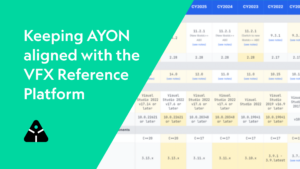
Keeping AYON aligned with the VFX Reference Platform, updates to supported platforms and DCC versions

Ayon-vfx-reference-platform

As AYON grows, we want two things to stay true. Integrations that are dependable in real production, and a development pace that lets us ship meaningful improvements instead of maintaining endless compatibility branches.

To do that, we regularly review the DCC and platform versions we actively test and officially support.

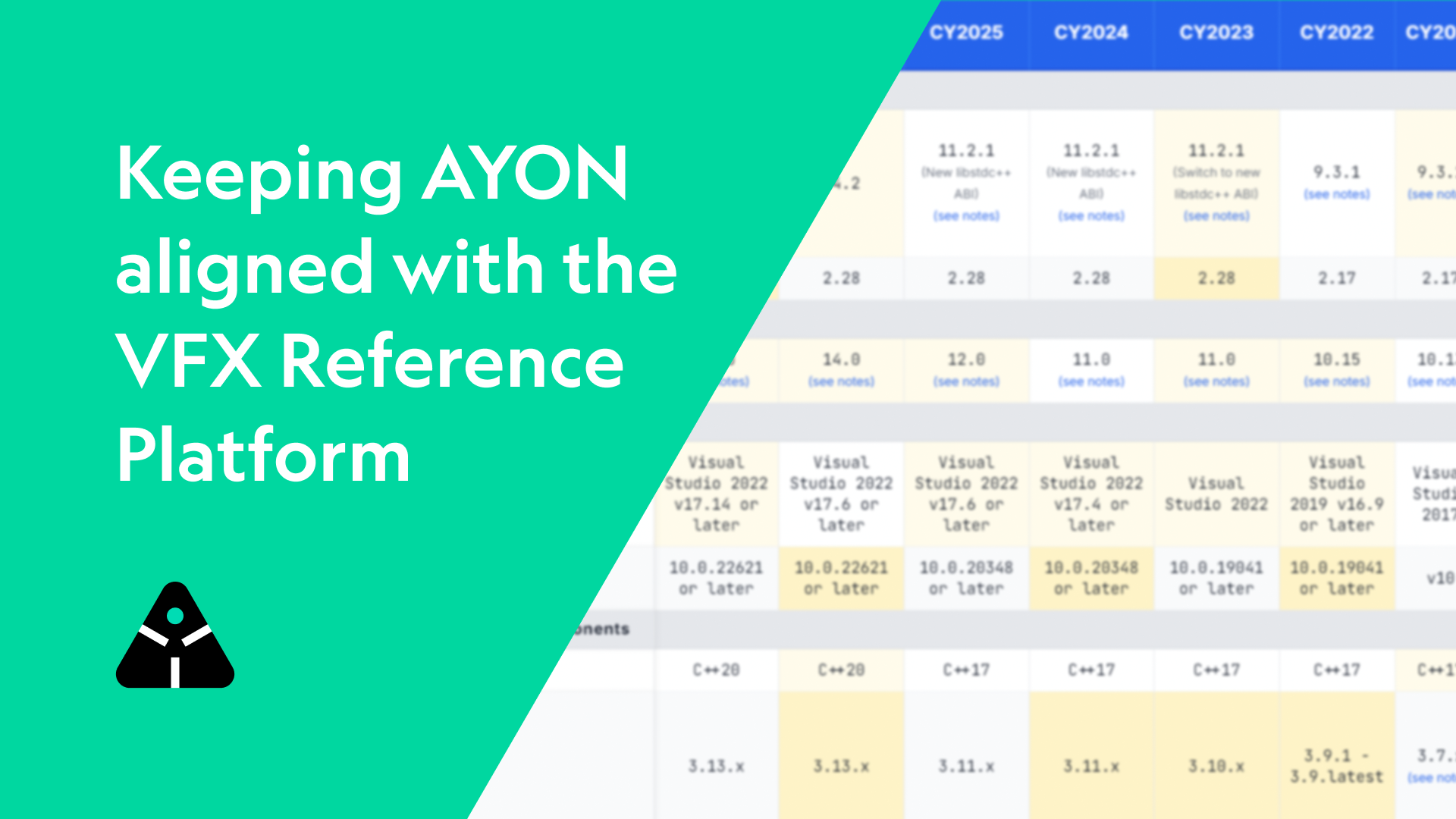
Adhering to the VFX Reference Platform

We aim to keep AYON aligned with the VFX Reference Platform and the direction of modern studio pipelines.

In practice, that means moving our supported baseline forward as the wider ecosystem moves on. Older DCC releases, operating systems, and dependency stacks do not usually fail all at once, but they do become harder to test, harder to maintain, and more fragile over time.

What is changing

The following DCC versions are moving to legacy status in AYON. We will no longer include them in our official test matrix, and we cannot provide full support coverage for issues that reproduce only on these versions:

  • Autodesk Maya 2022
  • Foundry Nuke 13
  • SideFX Houdini 18.5
  • Autodesk 3ds Max 2022
  • Blender 2.80 to 2.92
  • Substance 3D Painter 2021 versions


As a general rule, if you are running 2021-era tooling and older, it should now be considered outside the safer support window. In some cases, including certain 2022 releases, we are also moving the baseline forward to keep our dependency stack more consistent.

We are also preparing to end support for Rocky Linux 8 for AYON Linux builds. For Linux-based build environments going forward, we recommend Rocky Linux 9.

This is a support change for AYON builds, not a statement that Rocky Linux 8 immediately stops working or disappears overnight. It means Rocky Linux 8 is no longer the platform we want studios to build around for future-facing AYON deployments.

On the macOS side, we have more positive news. We will be rolling out signed builds for macOS with Python 3.11. This will improve support for Apple silicon Macs, including M1 and newer systems.
What no longer supported means in practice

This is not a hard cut-off where everything stops working on day one.

What it does mean is that we will stop actively testing and maintaining AYON integrations against these versions. Bugs that reproduce only on legacy versions will be deprioritised if we cannot reproduce them on supported versions.

Over time, you may also see gradual compatibility drift. Older DCC releases are often tied to older Python versions, which can limit how long we can support them. AYON depends on third-party libraries, and future fixes or updates may require versions that no longer support those older Python baselines. Older environments may continue to work for a while, but we cannot guarantee long-term functionality as the wider ecosystem moves forward.

Why this is a positive change

Moving the supported baseline forward helps us build a better product around the environments studios are actually moving to.

It lets us release updates faster, because we spend less time maintaining compatibility branches and one-off fixes for ageing platforms. It improves reliability, because we can test fewer, more relevant combinations and catch regressions earlier. It also gives us room to improve support for newer systems, including signed macOS builds and better support for current Apple hardware.

Most importantly, it keeps support sustainable. That means more engineering time can go into stability, performance, and roadmap work instead of legacy maintenance. It also reduces the risk of AYON being held back by older host applications that rely on end-of-life Python versions.

What you should do next

If your studio is still building around Rocky Linux 8, we recommend planning a move to Rocky Linux 9 for future Linux deployments.

If you rely on older DCC versions listed above, now is a good time to review your upgrade path and identify where compatibility risks may start to grow.

If your team works on macOS, watch for our signed builds and upcoming testing around newer Python support.

We know upgrades are not always straightforward, and we do not want anyone getting surprised in the middle of production. If your studio needs help planning the safest path forward, tell us what you are running and what constraints you are working under. We can help you map out the next steps.

More posts